
Rethink & Reuse Rethink & Reuse

Sustainable shopping & bulk buying

Shop smarter with less packaging

Shopping is where most household waste enters the home, so it is the point where prevention is cheapest. This page covers buying in bulk, reusable essentials, and how to tell which swaps are worth it.

You will not find a list of products to buy here. Instead, these are the habits that reduce packaging over time — and sustainable shopping tips only work when they replace a habit you already have.

Buying in bulk without overbuying

How to buy in bulk is not about giant sacks in the garage.

It means choosing the largest pack you will genuinely finish before it spoils. Rice, pasta, oats, and dried beans keep well and arrive with less packaging per serving than the same weight split across small bags. Split a large bag into jars at home as soon as you open it, so the contents stay fresh and you can see how much is left.

The honest test is shelf life against your cooking. If a household of two will not get through five kilos of flour in three months, the smaller pack creates less waste overall, packaging included. Bulk buying pays back on staples you use weekly, not on a bargain you will store for a year and then bin.

Keeps well in bulk
Rice, pasta, oats, dried beans, lentils
Check before buying large
Unit price, use-by date, storage space
Split at home into
Clean, dry glass jars with tight lids

Refill shops and how to use them

Refill stations let you top up liquids, grains, and sometimes cleaning products in your own containers. Bring clean, dry bottles and note the weight before you fill, since most shops deduct the container tare from the price. Start with two or three items you use weekly rather than trying to restock a whole pantry on the first visit.

Refilling only saves packaging if you actually return, so keep the shop on a route you already walk. A station two streets from the school run beats a better-stocked one across town you visit twice a year. If you are building a zero waste starter kit, the refill bottle is the piece that earns its place first.

Bring

Clean, dry bottles and jars with the lids off, plus one spare bag for dry goods.

Weigh first

Have the empty container weighed at the counter so the tare comes off your total.

Start small

Two or three weekly items, then add one more each time you go back.

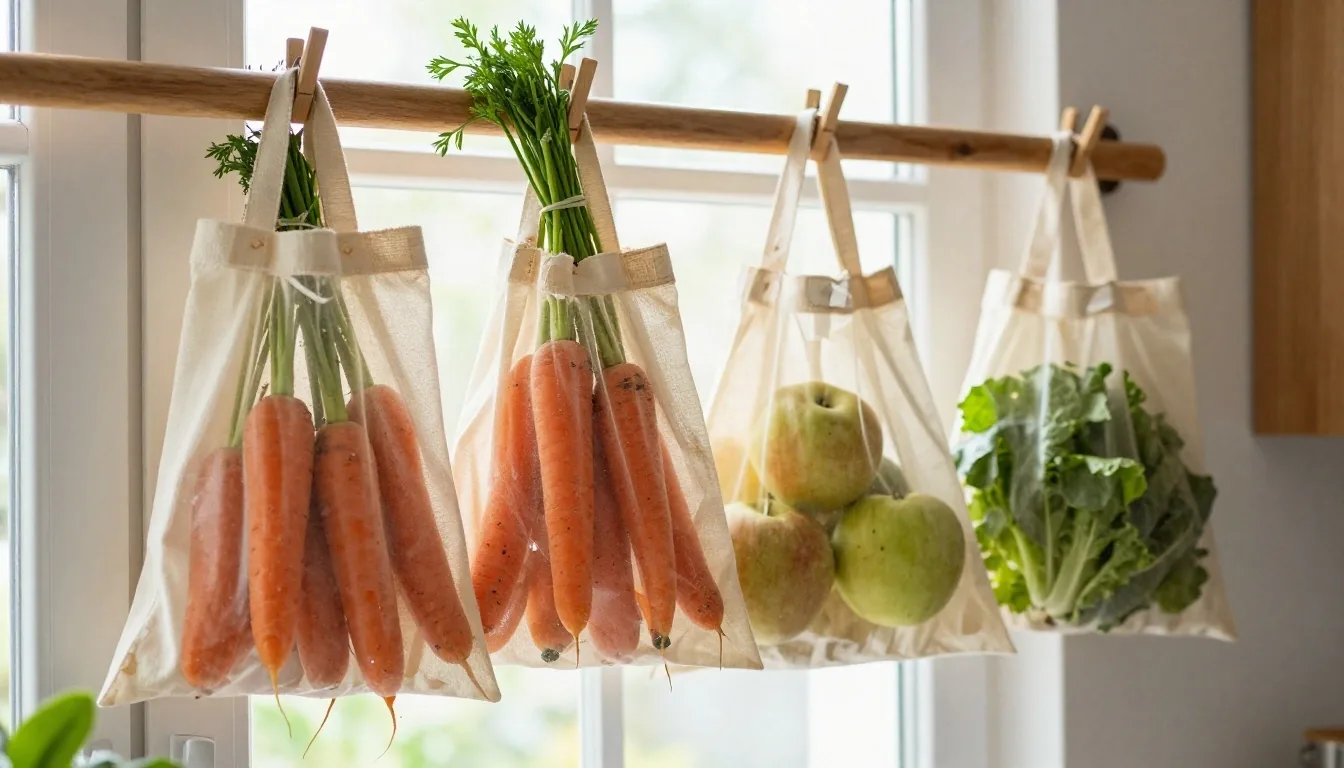
Reusable produce bags, and where they actually help

Cotton produce bags filled with loose vegetables on a worktop, with a roll of plastic film pushed to the edge

Loose fruit and veg are the easiest packaging to avoid, and they are usually the cheapest line on the receipt too. A reusable produce bags guide comes down to one decision: pick light fabric that breathes rather than a coated or lined bag. Breathable cotton lets moisture escape, so greens and root vegetables often keep longer than they would sealed in plastic.

Three bags cover most weekly shops. Weigh them once at home and write the weight on the label if you shop in a group or send someone else to the market, since some tills deduct bag weight and some do not. Wash them with the laundry every few weeks, or more often if something has leaked, and they will outlast a year of thin rolls by a long way.

Beeswax wraps usage and care

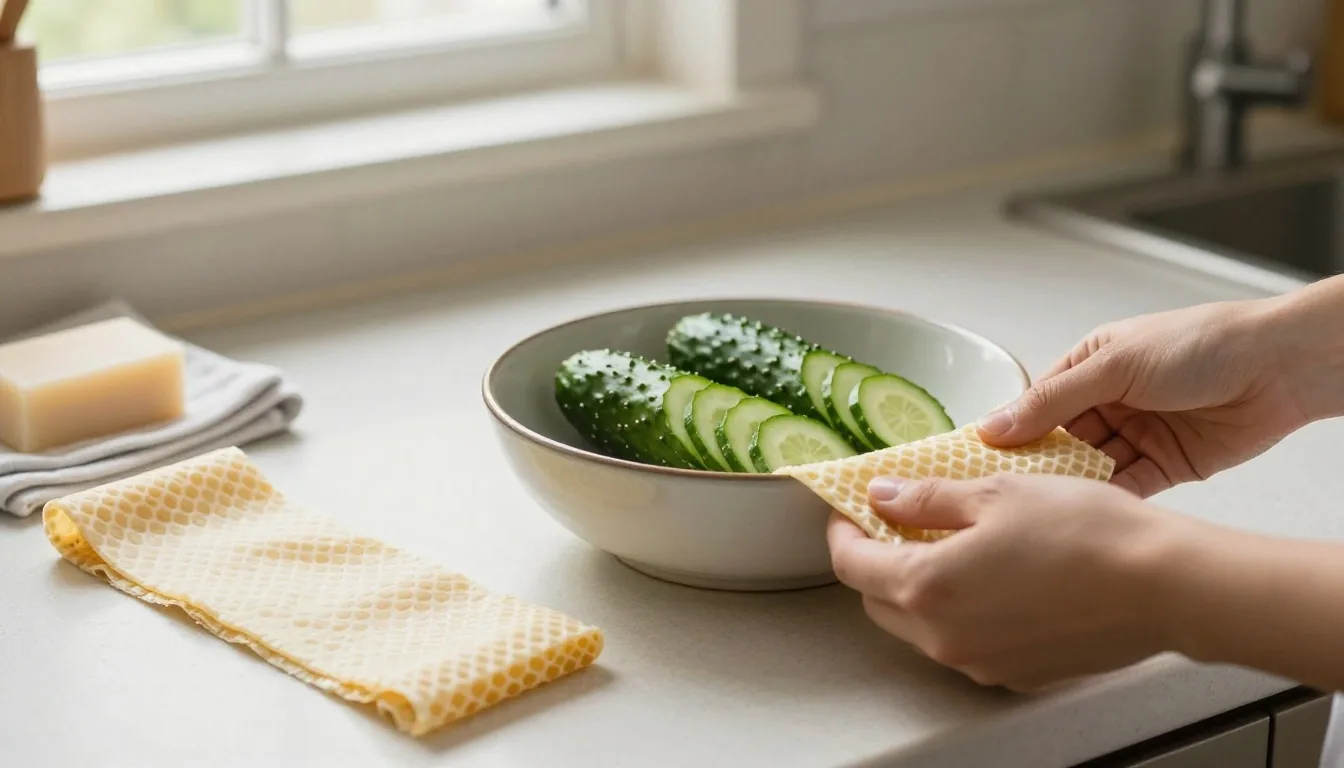
Warm it in your hands. Seal the bowl. Wash it cool.

Beeswax wraps: usage and care without the fuss

A wrap covers bowls, folds into a sandwich pouch, and takes the place of cling film for most of the fridge. The warmth of your hands is enough to soften the wax and make it grip, which is why cold hands in a cold kitchen need an extra few seconds of pressing.

Care is where wraps live or die. Hot water melts the wax and ruins the grip.

Six things to remember

  • Seal with hand warmth, never a flame or a hot pan
  • Wash in cool water with a mild soap and a soft cloth
  • Keep away from raw meat and fish entirely
  • Dry flat, then store folded or rolled, not crumpled
  • Fridge-safe for bowls, cheese, and cut vegetables
  • Refresh tired wax, or compost the cloth when it is done

Treated this way, one wrap usually covers about a year of kitchen use before the wax needs refreshing. That is the whole of beeswax wraps usage and care, and it becomes routine within a fortnight.

Hands folding a beeswax wrap over a ceramic bowl of sliced cucumber on a worktop

Reading packaging claims honestly

Words like recyclable or eco appear on plenty of items that still arrive wrapped in film.

Look at the material

Check what the packaging is actually made of, not what the front-of-pack badge implies. A single-material tub or paper bag is far easier to place than a foil-lined pouch.

Check your council

Collection rules differ street to street. What your kerbside service accepts is the only test that matters for your household; a widely recyclable material your area does not take still ends up in the general bin.

Count the layers

When two options look similar, choose the one with fewer layers. A product in a single material your area recycles beats one with a mix that has to go to landfill. Get the shopping habits right here and the rest of the low waste home guide has less to undo.

Sustainable home essentials worth owning — and what to skip

A few items earn their place in a low-waste kitchen, and the rest of the so-called eco range exists to be sold rather than used.

Worth owning

  • A water bottle you actually carry, in a shape that fits your bag
  • Two or three cloth bags, kept where you will remember them
  • A set of glass jars for bulk staples and leftovers
  • A small repair kit for clothes: needle, thread, spare buttons

These replace recurring disposables, so they pay back over time. Buy to replace something finished, not to start a collection.

What not to bother with

  • Cutlery sets you will never remember to carry
  • Single-purpose gadgets that do one job in a drawer
  • Bulk buys of anything you have not tested once
  • A second set of jars before the first is full

These purchases feel green but add clutter. Plastic free alternatives help only when they replace something you use often — if a swap creates more work than it saves, the waste comes back.

Where shopping stops and the rest starts

Once your shopping habits settle, the kitchen swaps page covers storage and cleaning in more detail — plastic free food storage, eco friendly kitchen cleaning, and the small tools that make both easier.

Upcycling handles the containers and clothes you would otherwise bin, which is where simple upcycling projects and creative upcycling ideas take over from buying. Composting food scraps at home covers the other half of the kitchen waste equation.

Questions we get about sustainable shopping

Is buying in bulk always cheaper?

Not always. The saving is usually in packaging and trips rather than the shelf price, so compare unit prices before you commit. If a large pack spoils before you finish it, the waste cancels the benefit — and the smaller pack was the better buy.

How do I find a refill shop near me?

Ask in local zero waste groups, or search for refill stations in your area. Many high streets now have at least one, and some markets run a stall one day a week. Worth checking the opening hours before you carry a bag of empty jars across town.

Can beeswax wraps go in the fridge?

Yes. They work well in the fridge for covered bowls and for wrapped cheese or vegetables. Keep them away from direct contact with raw meat and fish, and let the wrap come back to room temperature before washing so the wax is not brittle.

Do reusable produce bags keep food fresh?

Breathable fabric bags often keep vegetables fresher than sealed plastic, because they let moisture escape instead of trapping it against the leaves. Wash them occasionally to prevent mould, and give anything damp a shake before it goes in the drawer.

Start with one aisle

Pick a single shelf you buy from every week — dry goods, produce, or cleaning — and change only that for a month. One habit holding is worth more than a cupboard of unused kit, and it tells you which of the next swaps will actually stick. If a topic you need is missing, tell us and we will write it.

Build a starter kit

Questions about a swap before you buy it? Write to Rethink & Reuse — Monday to Friday, 9:00 AM – 6:00 PM, Saturday 10:00 AM – 2:00 PM.