
Beeswax wraps for everyday covering
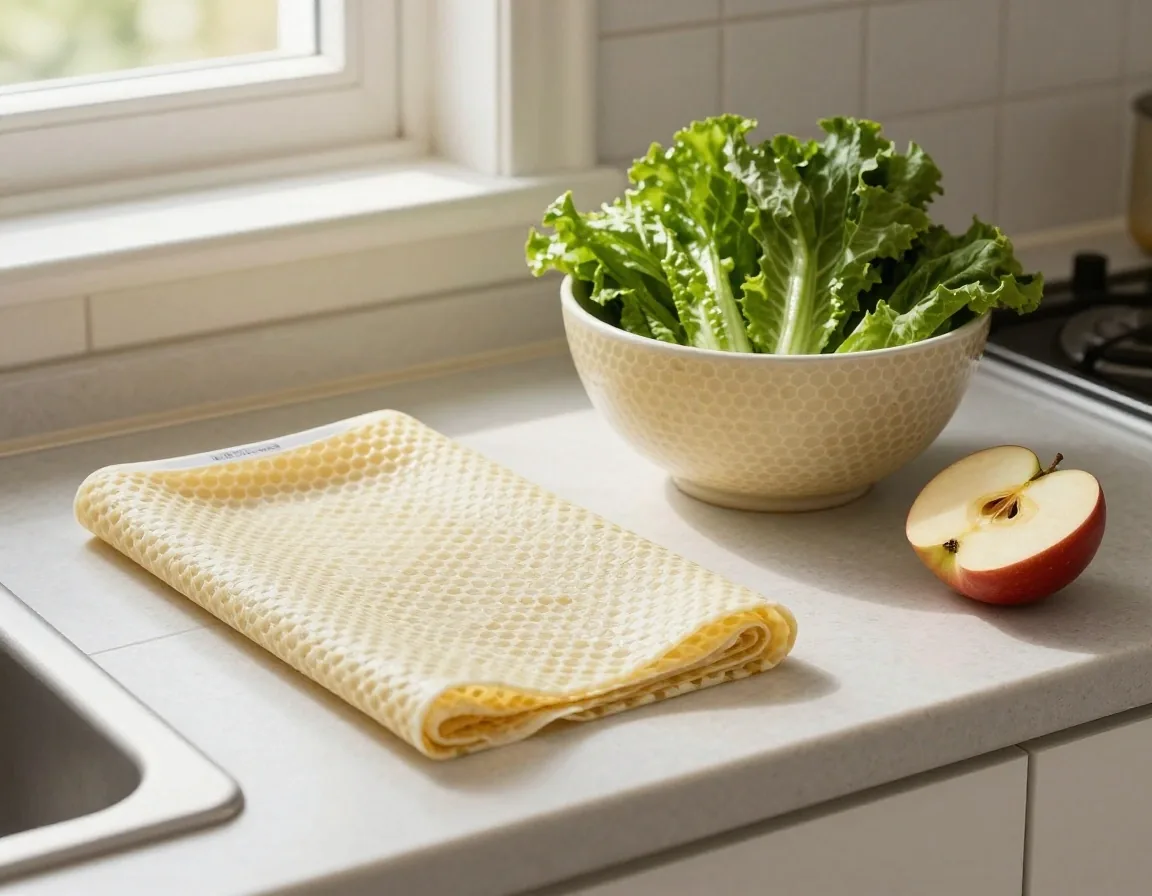
Use for bread, cheese, vegetables and covered bowls. Keep them away from raw meat, since the wax can't be properly sanitised, and refresh the coating once the wrap stops clinging.
Refreshed roughly once a year
Get in touch
+44 20 7946 0821 [email protected]42 Bramley Road, London, N14 4HR, United Kingdom
Monday to Friday, 9:00 AM – 6:00 PM; Saturday, 10:00 AM – 2:00 PM
Rethink & Reuse
The kitchen is where most household waste is created, and where the fastest reductions happen. This page covers the swaps that cut the most, from food storage to cleaning, without asking you to rebuild your cupboards.
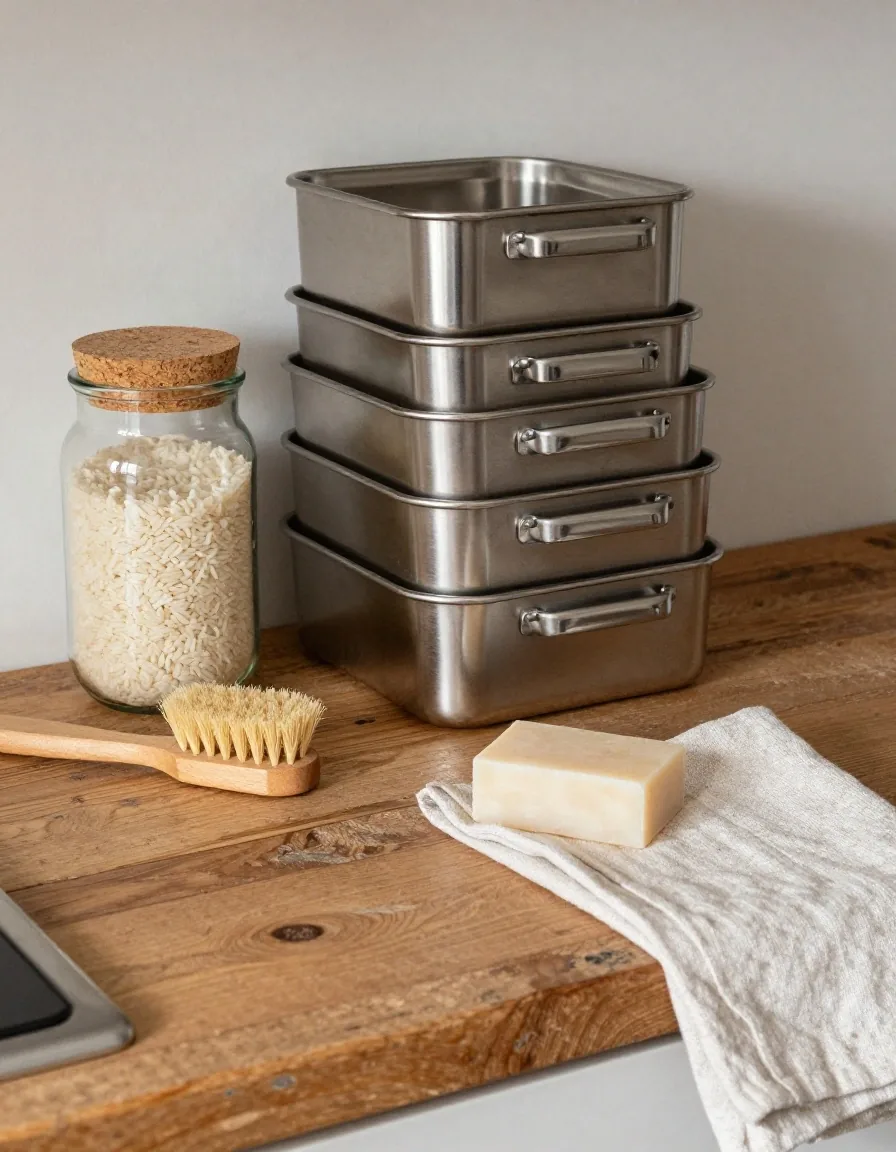
Cling film is convenient and almost always unnecessary. Beeswax wraps cover bowls and wrap sandwiches, and with cool water and mild soap they last around a year before the wax needs refreshing. Glass jars handle leftovers, dry goods, and sauces. Lidded containers you already own do the rest. Plastic free food storage is mostly about using what is in the cupboard, then replacing film only when it runs out.
Use for bread, cheese, vegetables and covered bowls. Keep them away from raw meat, since the wax can't be properly sanitised, and refresh the coating once the wrap stops clinging.
Refreshed roughly once a year
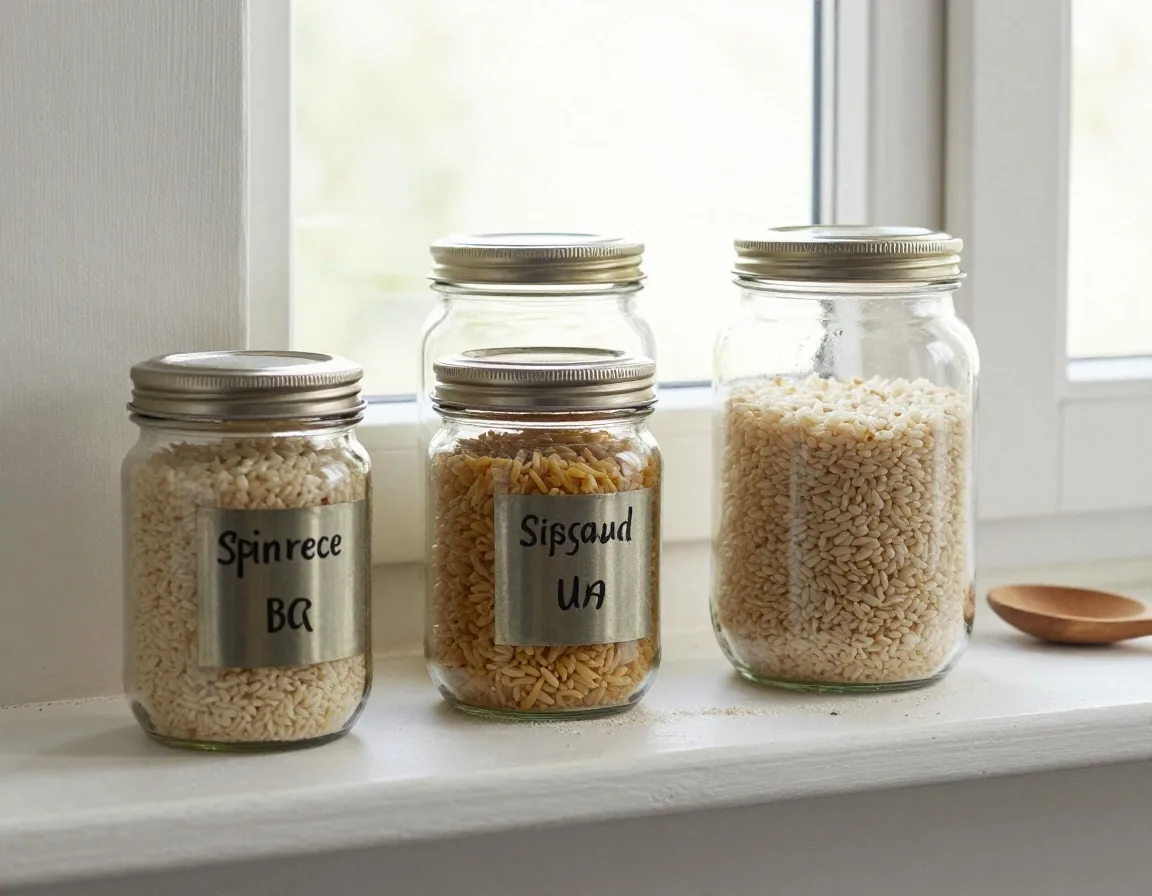
Old jam and sauce jars work as well as purpose-bought ones. Match the lid to the jar so the seal holds, and keep dry goods away from the window where light fades flavour.
No purchase needed if the cupboard has them
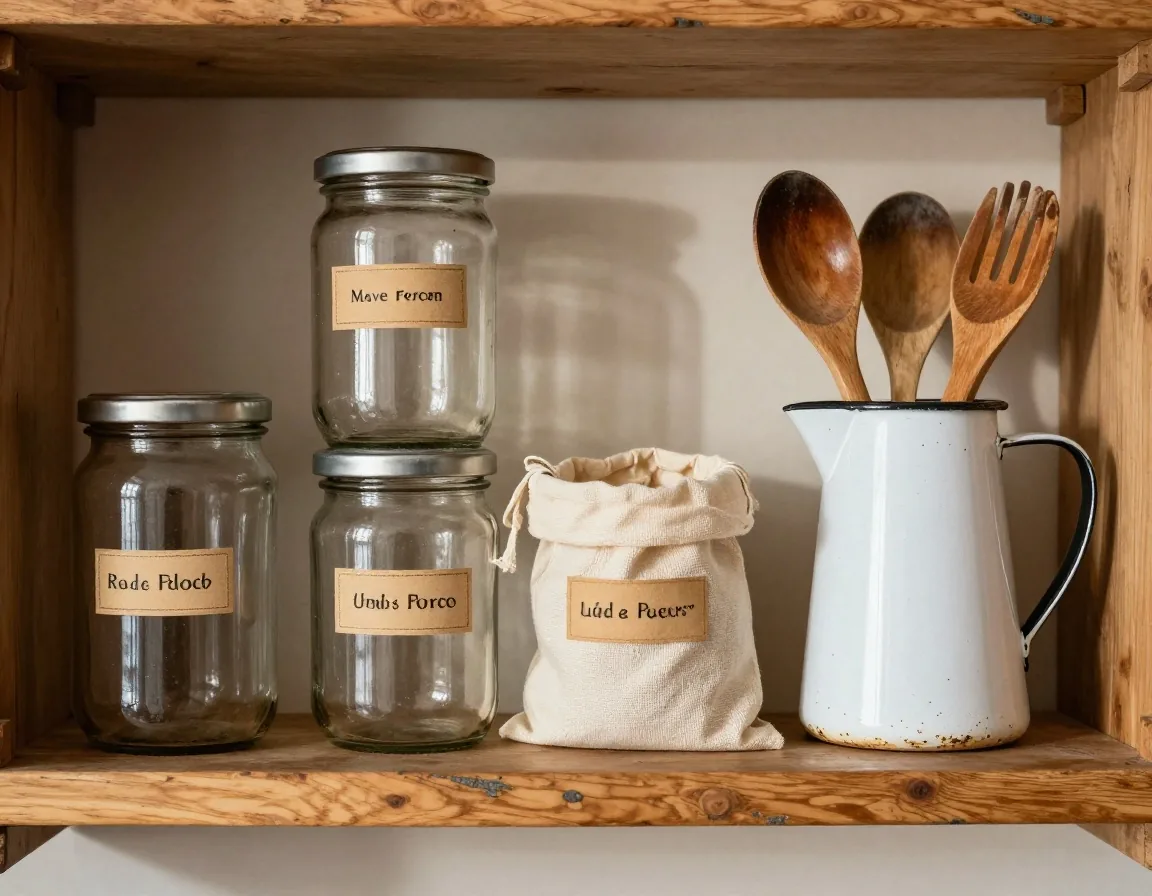
Mismatched lids matter less than a good seal. Sort what you have into nested stacks, then note the missing sizes so you only replace the pieces you actually use.
Reuse first, replace second
Fruit and veg are the easiest packaging to avoid, because most supermarkets sell them loose. Reusable produce bags replace the thin rolls by the shelves and weigh almost nothing. Some items still come wrapped no matter what, so choose the loose option where it exists and accept the rest. Over a month, the difference in soft plastic is noticeable.
A reusable produce bags guide is short: buy light open-weave cotton bags a size larger than you think, then keep them folded with your shopping list so they travel with you.
Read sustainable shopping tips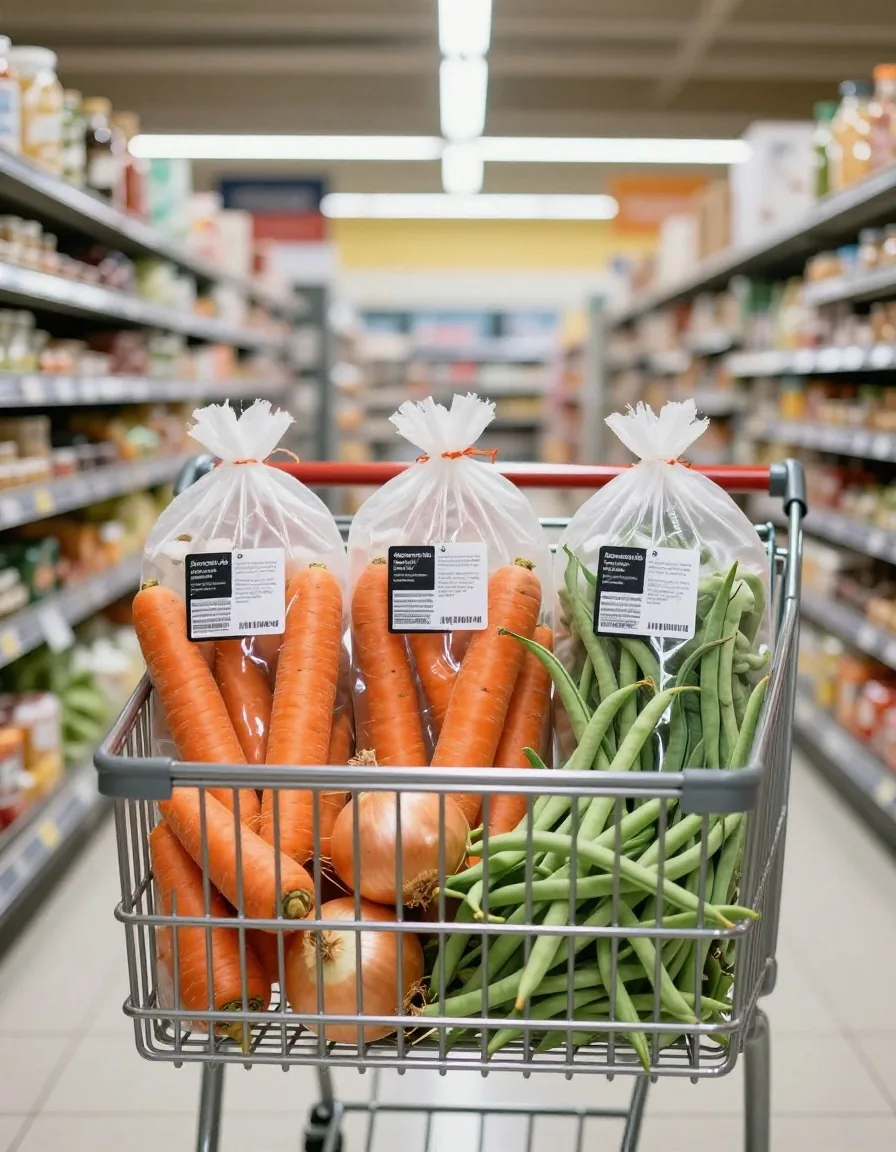
Refill stations for washing-up liquid and surface cleaner are now common on UK high streets, and some supermarkets run them too. A single bottle refilled replaces a steady stream of new ones. Bicarbonate of soda and white vinegar handle most everyday cleaning, from sinks to hobs. Eco friendly kitchen cleaning does not need a cupboard of specialty products.
A large share of food waste is cooked food that never gets finished. Clear containers help, because you can see what is in them. Label and date anything going in the fridge, and put older items at the front. A weekly "use it up" meal, where leftovers become a soup, stir-fry, or frittata, clears the shelf before shopping day.
Move older items to the front of the shelf each time you unpack groceries so nothing slips behind.
A date on the lid beats guessing. Portion cooked meals before they sit in the fridge for days.
Soups, stir-fries and frittatas absorb odds and ends and clear the shelf the night before shopping.
Washing up, and the sponge problem
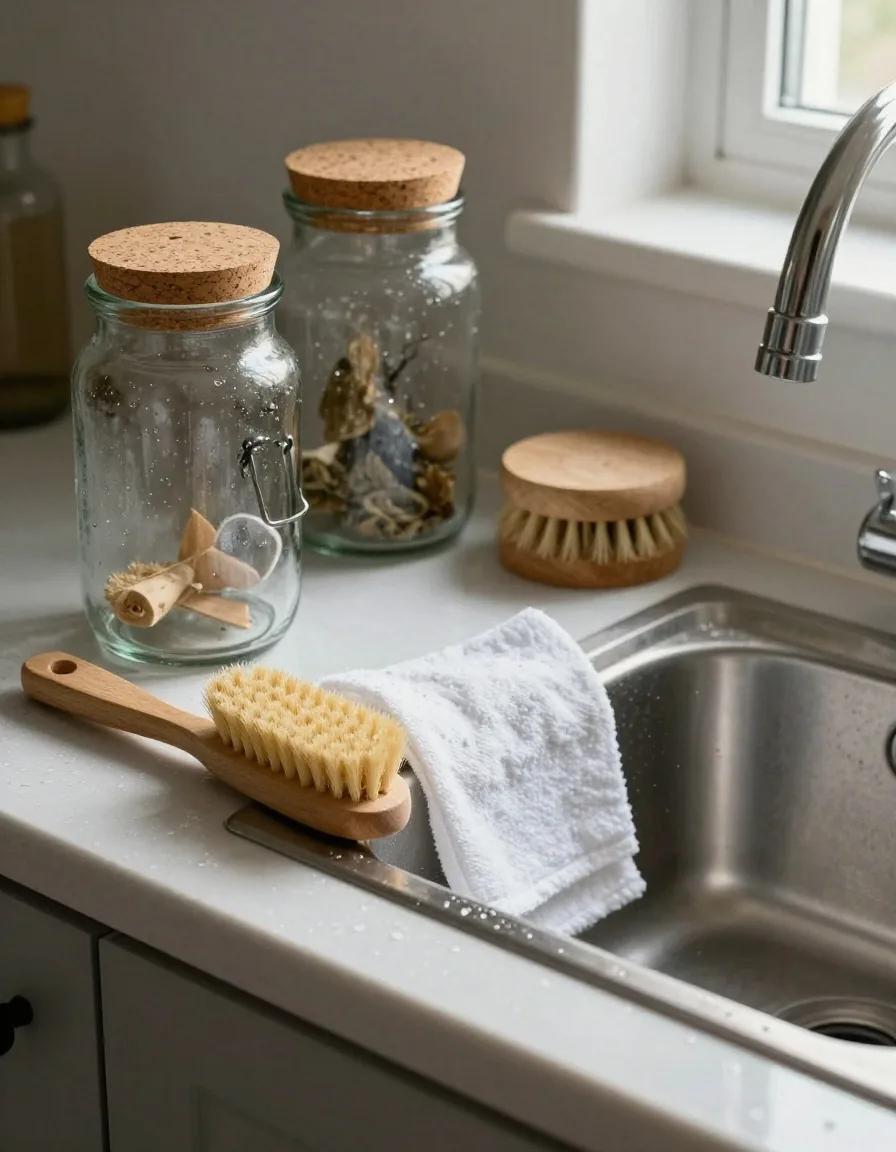
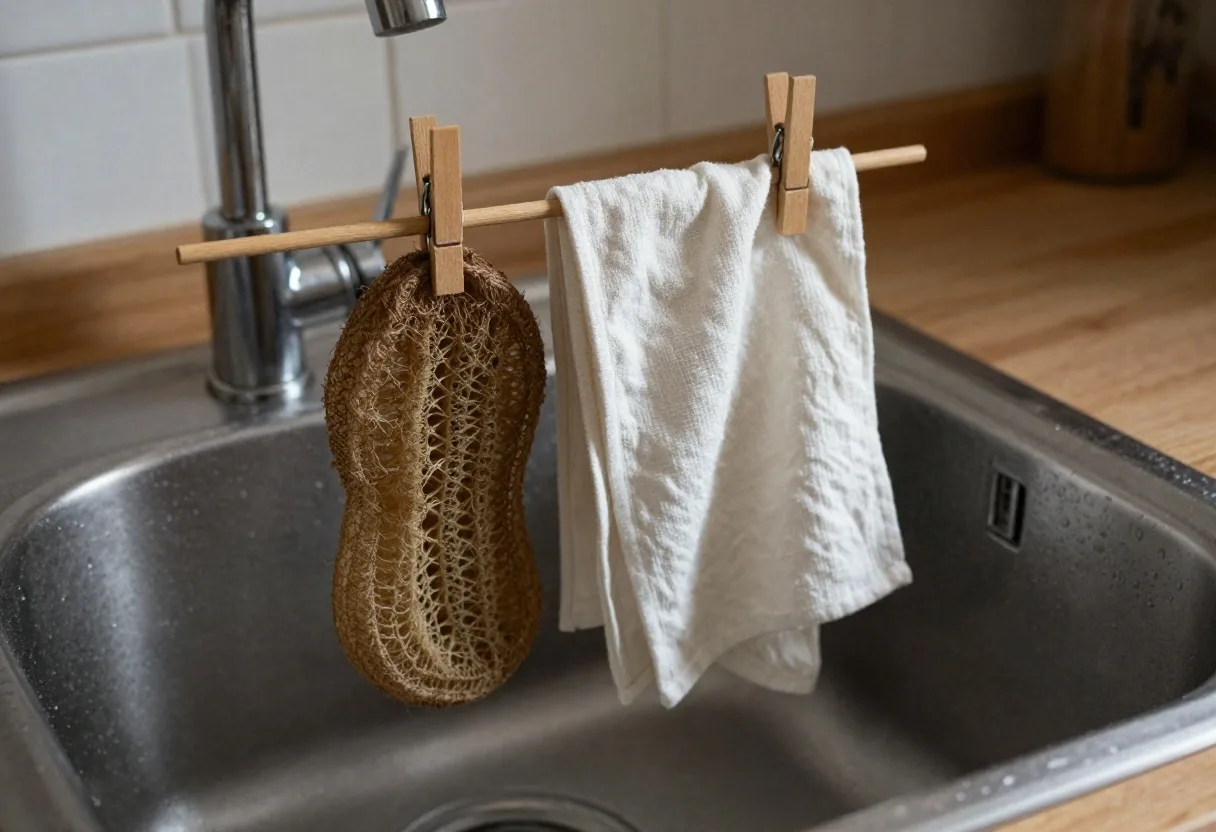
Sponges and cloths are small but frequent purchases, and most are plastic-based. Cloth dishcloths can be washed and reused for months. Loofah or natural sponges compost at the end of their life. This is a minor swap in cost terms, but it removes a recurring item from the bin, which is the point of a low waste home guide.
Rotate two cloths so one dries while the other is in use. Damp cloths held in a folded bundle at the sink are the ones that go sour. A small steel or ceramic dish beside the tap, or a hook on the cupboard door, gives the cloth a place to dry and keeps the sink edge clear.
Almost everything keeps longer in a cold, ordered freezer than in a full fridge.
Freezing extends the life of almost everything. Bread, herbs, overripe bananas, and half-used vegetables all freeze well. Portion cooked meals before they sit too long in the fridge. A freezer that is actually used reduces both shopping trips and bin weight. Just keep a list on the door so nothing gets lost at the back.
What freezes well, and how to pack it
Begin with storage and leftovers. Clear containers, dates on lids, and one weekly use-it-up meal will cut more than any single product purchase.
Begin with shopping and produce bags. Loose fruit and veg is where the soft plastic stacks up fastest, and the change costs almost nothing.
Start at the refill station. One bottle refilled replaces a steady stream of new ones, and bicarb plus vinegar covers most everyday jobs.
Match the first swap to your actual routine, not to a generic checklist. The zero waste tips for beginners that stick are the ones that attach to something you already do every day. The next step is deciding what to do with scraps, which the composting page covers.
Browse the starter kitNo. Use them for bread, cheese, vegetables, and covered bowls. Keep raw meat in a washable container instead, since the wrap cannot be properly sanitised.
Sometimes, sometimes not. The saving is usually in packaging and repeat trips rather than the liquid itself. Compare your local refill price before switching.
Use clear containers, keep older items at the front, and set one weekly meal for using things up. Visible food gets eaten more often than hidden food.
No. Avoid it on natural stone such as marble and granite, since the acid can dull the finish. Use mild soap and water there instead.
Keep going
Composting at HomeWhat to do with peelings, coffee grounds and the scraps this page keeps out of the bin.
Shop the pantry side
Sustainable Shopping & Bulk BuyingBulk bins, refill prices and how to compare a loose shop against a packaged one.
Tell us what you need
Suggest a topicCooking on a budget or in a small kitchen? Tell us and we will cover the swaps that fit.