
Rethink & Reuse Rethink & Reuse

Kitchen waste, handled at home

Compost food scraps at home

Food scraps are the heaviest part of most kitchen bins, and the easiest to divert. Composting turns them into a useful material instead of landfill, where they would produce methane.

You do not need a garden to start. This page covers the options by space and effort, so you can pick the one that fits your home. Composting food scraps at home is less fuss than it sounds.

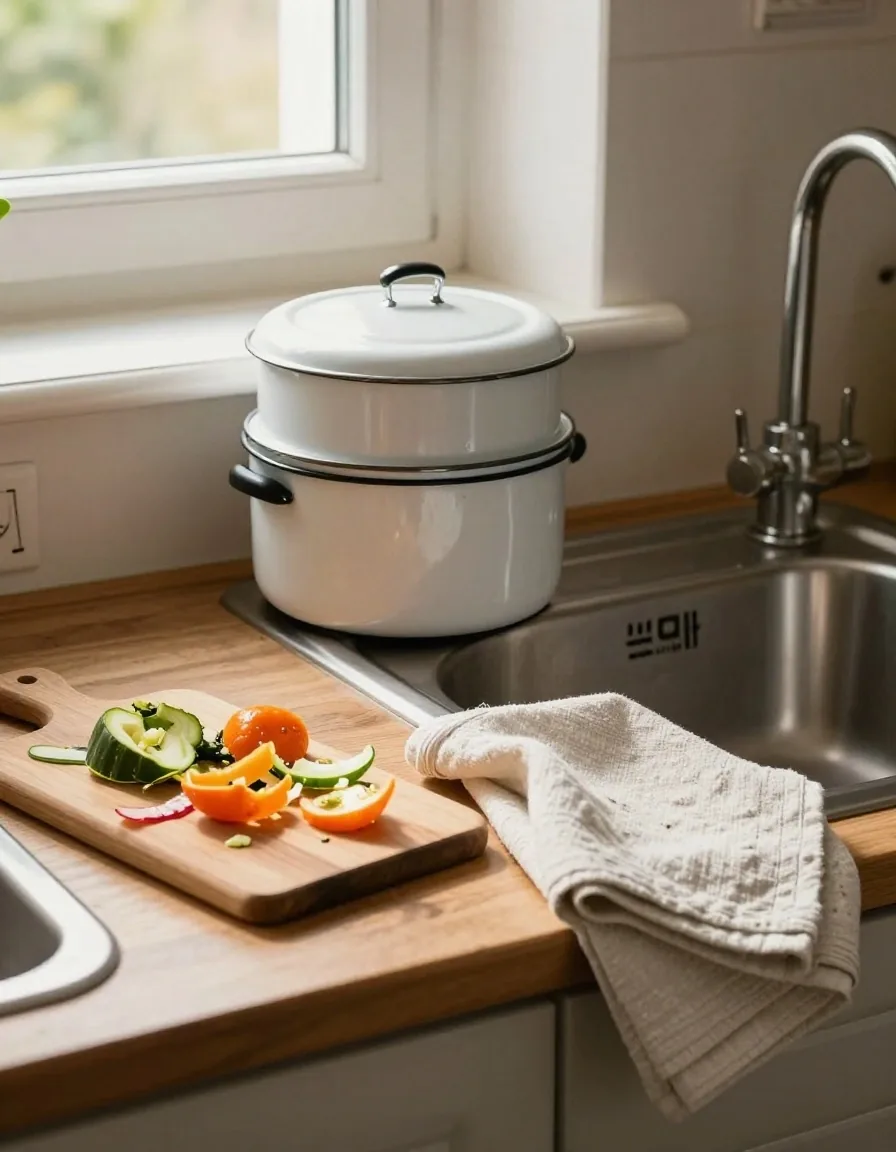
A kitchen worktop with a lidded scraps caddy, a wooden board of vegetable peelings and a folded cloth in late afternoon light.

Four routes, one decision to make

Start by finding out what your council already collects. That answer decides everything else — whether you buy equipment at all, and how much of the kitchen bin you actually get to empty into something useful.

Check your council collection first

Many UK councils collect food waste separately, sometimes weekly. If yours does, that is the simplest route and needs no equipment beyond a small caddy.

Check what they accept, since some take cooked food and others only raw peelings. A five-minute look at your council's recycling page tells you whether you need to do anything else at all.

Weekly in many areas
The countertop caddy

A lidded caddy keeps daily scraps contained and out of the main bin. Empty it every day or two into a larger bin or collection point.

Line it with paper or a compostable bag if you prefer, though a quick rinse works too. Keeping it small and empties frequent is the whole trick. This single item often makes the biggest difference in a beginner's kitchen.

Outdoor composting for gardens

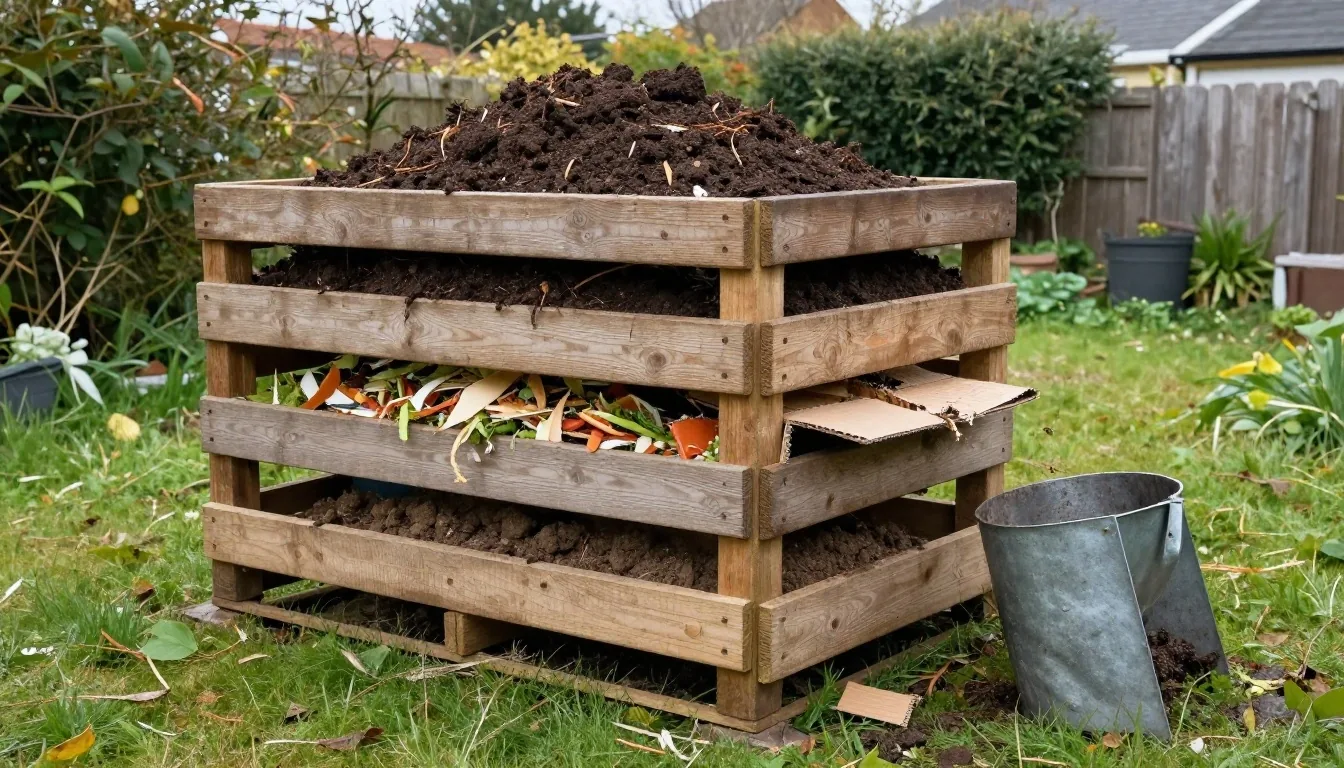
If you have outdoor space, a compost bin or heap takes most kitchen scraps along with garden waste. Balance greens like peelings with browns like cardboard and dry leaves. Turn it occasionally and keep it as damp as a wrung-out sponge. The result is compost you can dig into beds. This is the most forgiving method once it is set up.

Greens

Vegetable peelings, fruit scraps, coffee grounds, fresh grass clippings.

Browns

Cardboard, torn paper, dry leaves, small twigs, used kitchen roll.

Indoor bins for flats

Without a garden, a sealed indoor bin is the practical option. Bokashi bins ferment scraps using a bran inoculant and take most food, including small amounts of meat and dairy. Worm bins handle vegetable scraps and produce a liquid feed. Both are low-odour when managed, which matters in a flat. Choose based on what you will actually maintain — a system you keep running beats a clever one you stop using.

A three-bay garden compost heap with fresh scraps in one bay and finished compost in another, a fork resting nearby.

Balance, moisture, air

A heap that gets turned every few weeks finishes far quicker than one left alone.

What can and cannot go in

Most systems take vegetable and fruit scraps, coffee grounds, tea leaves, and eggshells. The confusion starts with everything else. When in doubt, leave it out — a bin recovers from a missed peel far faster than from a batch of the wrong thing.

Compostable packaging is often not accepted, so check before adding it. The label on the packet is not a guarantee that your heap, your council, or your indoor bin will break it down.

Generally fine

  • Vegetable and fruit peelings
  • Coffee grounds and tea leaves
  • Crushed eggshells
  • Torn cardboard and dry leaves
  • Small amounts of cooked food in bokashi

Leave out of a standard heap

  • Large amounts of meat, dairy, or oily food
  • Most compostable packaging
  • Anything you are unsure about

Most problems in a home compost bin come down to moisture and balance — and both are fixable in about a week.

Troubleshooting common problems

A compost bin that is behaving oddly is usually telling you something specific. Read the symptom, change one variable, and give it a fortnight before you change anything else.

A smelly heap

Usually too wet or short on browns. Add cardboard, turn it through, and check that it still drains. If it squelches when you dig in, it is waterlogged.

Fruit flies

They mean exposed scraps. Bury fresh additions deeper into the pile, keep the lid seated properly, and empty the countertop caddy more often.

A bin that does nothing

Too dry or too cold. Add a little water as you turn, and accept that slow winter breakdown is normal rather than a fault.

Nothing seems to break down

Chop scraps smaller and add more browns. Whole citrus skins and corn cobs will sit there for months if nothing else is working around them.

Most issues come down to moisture and balance, and both are fixable in a week. Keep a bag of torn cardboard next to the bin and you will rarely need to think about it again.

Questions we get asked

Can I compost without a garden?

Yes. A sealed indoor bin or a bokashi system handles food scraps in a flat. A council collection is even simpler if it is available in your area.

Why does my compost smell?

Usually too much moisture or not enough brown material. Add dry cardboard or leaves and turn the heap, then check that it drains.

Can I put cooked food in a compost bin?

In a standard outdoor heap, usually no, because it attracts pests. Bokashi bins are more flexible and take small amounts of cooked food.

How long until I get compost?

It varies with temperature and how often you turn it. A well-managed heap can finish in a few months; a cold or neglected one takes longer.

Reading next

With food waste handled, the rest of the kitchen is easier to sort out. Start where your bin is heaviest, and work outward from there.

Kitchen swaps and storage

Plastic free food storage, eco friendly kitchen cleaning, and the zero waste kitchen swaps worth making first.

Read kitchen swaps

Shopping and bulk buying

Sustainable shopping tips and how to buy in bulk so less comes through the door in the first place.

See sustainable shopping tips

Start with the basics

A beginner routine for zero waste living: what to change in the first month and what can wait.

Browse the starter kit

More from the guide

Tell us what you need

Composting in a flat, a shared house, or a small garden all throw up different questions. If a topic is missing from these guides, suggest it and we will look at covering it.

Suggest a topic

The editorial desk

Rethink & Reuse
42 Bramley Road
London, N14 4HR, United Kingdom
+44 20 7946 0821
[email protected]

Mon–Fri 9:00–18:00 · Sat 10:00–14:00